
Yesterday I opened the ramsac AI Summit with a session called Four Reasons Not to Adopt AI and I wrote it up here the same evening. Three hours later, on the same stage, I closed the event with the opposite title. This is that piece, and it's not simply the first one in reverse. Looked at properly, each of the four objections turns out to rest on an assumption that's already out of date. Once you correct the assumption, what's left isn't a rebuttal, it's a genuine argument for moving now rather than later.
Nobody is ahead
The instinct in most boardrooms is to treat AI adoption as a race with a leader, and to assume that leader is someone else. It isn't. I work with organisations of every size, and I haven't met one that considers itself finished. What's actually happened is that the race everyone thinks they're behind in, whose model is smartest, has stopped being the race that matters. The gap between the best model and the merely good one, for most of what a business needs day to day, has closed to the point where it barely factors into a serious decision anymore.
That changes what "being behind" actually means. The real risk was never falling behind a competitor who started earlier. It's the gap opening up between the organisations building genuine working habits with AI now, however imperfectly, and the ones still waiting for a cleaner moment to start. That gap compounds. The businesses six months into learning what doesn't work aren't in the same position as the ones who haven't started, even if neither has anything resembling a finished strategy. Nobody being ahead isn't a comforting stalemate. It's the only moment a business gets to start without a disadvantage baked in.
The value question has changed
For the past two years, the honest answer to "does AI pay for itself" has been "it depends on what you're measuring." That's no longer where the interesting question sits. AI has moved from answering questions to doing work, and the value shift that comes with that move is easy to miss if you're still pricing it like a productivity tool.
A tool that answers questions faster saves individual minutes. Something that does work, drafts the first version, triages the request, surfaces the pattern before a human asks for it, changes the shape of a whole process, not just the time any one person spends on a task within it. That's a harder thing to put a number on before you've built it, which is exactly why so many businesses stall waiting for a business case that can't exist yet. Value here isn't calculated in advance. It's observed once something is running properly, and the businesses seeing it clearly are the ones who accepted that trade and started measuring from inside the process rather than demanding proof from outside it.
Adoption is a human problem with a human answer
Most AI rollouts that fail don't fail on capability. They fail on the gap between three enthusiasts who've built something genuinely useful and the rest of the business, who've heard about it, possibly resent it slightly, and haven't changed a single habit. Closing that gap looks nothing like a training rollout. Mandating use of a tool produces compliance, not adoption, and compliance evaporates the moment nobody's watching.
What actually works is closer to what any lasting behaviour change requires: visible proof from someone the sceptics already trust, low enough stakes that trying it doesn't feel risky, and enough repetition that it becomes the default rather than the exception. That's a culture question dressed up as a technology rollout and treating it as the latter is the single most common reason good tools sit unused. The businesses getting adoption right aren't running better training. They're running better habit formation, and they've stopped expecting a tool to sell itself.
Trust can go up, not down
The instinct to treat AI as a threat to security and governance is understandable and largely inherited from treating every new system that touches data as a risk until proven otherwise. That instinct isn't wrong. It's just aimed in the wrong direction. Trust was never a property of the technology itself. It's a design decision, the same one that's applied to every other system handling sensitive information: where it runs, who can access it, whether it's encrypted, governed and auditable.
There's a principle that I talk about in a lot of my talks which is applicable here: govern what matters, don't slow what works. Good governance isn't a brake applied evenly across everything. It's judgement applied where the risk and the sensitivity are actually high, so that the rest of the business isn't stuck waiting on a policy committee to approve something low stakes. Handled this way, the discipline AI adoption forces on a business, asking who has access, where data actually lives, what's auditable, tends to expose gaps that were already there in older systems nobody had got round to questioning. AI doesn't have to erode trust. Done properly, it's often the reason a business finally looks hard enough at its own data practices to improve them.
Where to actually start
Put those four together and what you get isn't a strategy document, it's permission to start somewhere specific. I encourage you to find your flagship use case, the one part of the business where, if AI took the administrative weight off a single team for six months, you'd genuinely feel it. Prove it there before you try to prove it everywhere. The businesses doing this well aren't the ones with the most ambitious roadmap on paper. They're the ones who picked one real thing and made it work before they scaled it.
Nobody's ahead. That was true yesterday morning, and it's still true now. The only thing that's changed is that you've got one fewer reason not to start.
Frequently asked questions
Are most businesses already far ahead in AI adoption?
No business considers itself finished. The gap between the best and good AI models has closed, so having the smartest tool no longer matters. The real risk is falling behind organisations that build working habits today. Waiting for a cleaner moment only creates a compounding disadvantage, making now the best time to start.
How should a business measure the value of adopting AI?
Value cannot be fully calculated in advance because AI has shifted from answering questions to doing actual work. Instead of demanding proof before starting, businesses should observe value from inside the process once tools are running. True value comes from reshaping whole processes rather than merely saving individual minutes on single tasks.
Why do many AI rollouts fail in organisations?
Most rollouts fail due to human behaviour rather than technology limitations. Mandating new tools produces temporary compliance that disappears quickly. Successful adoption relies on visible proof from trusted colleagues, low risk experiments, and repetition. It requires better habit formation and cultural change rather than relying solely on standard software training rollouts.
Does adopting AI risk damaging business data security?
Not if handled correctly. Trust depends on design decisions such as access controls, encryption, and auditability. Good governance focuses on actual risk rather than slowing everything down. In fact, adopting AI often forces organisations to examine their existing data practices, exposing and fixing security gaps that were previously ignored.
What is the best way for a business to start with AI?
Businesses should avoid ambitious strategies on paper and instead select one specific flagship use case. Choose a single team where lifting administrative tasks for six months creates a noticeable impact. Proving value in one real area before attempting to scale is far more effective than trying to transform the entire organisation at once.
You may also be interested in
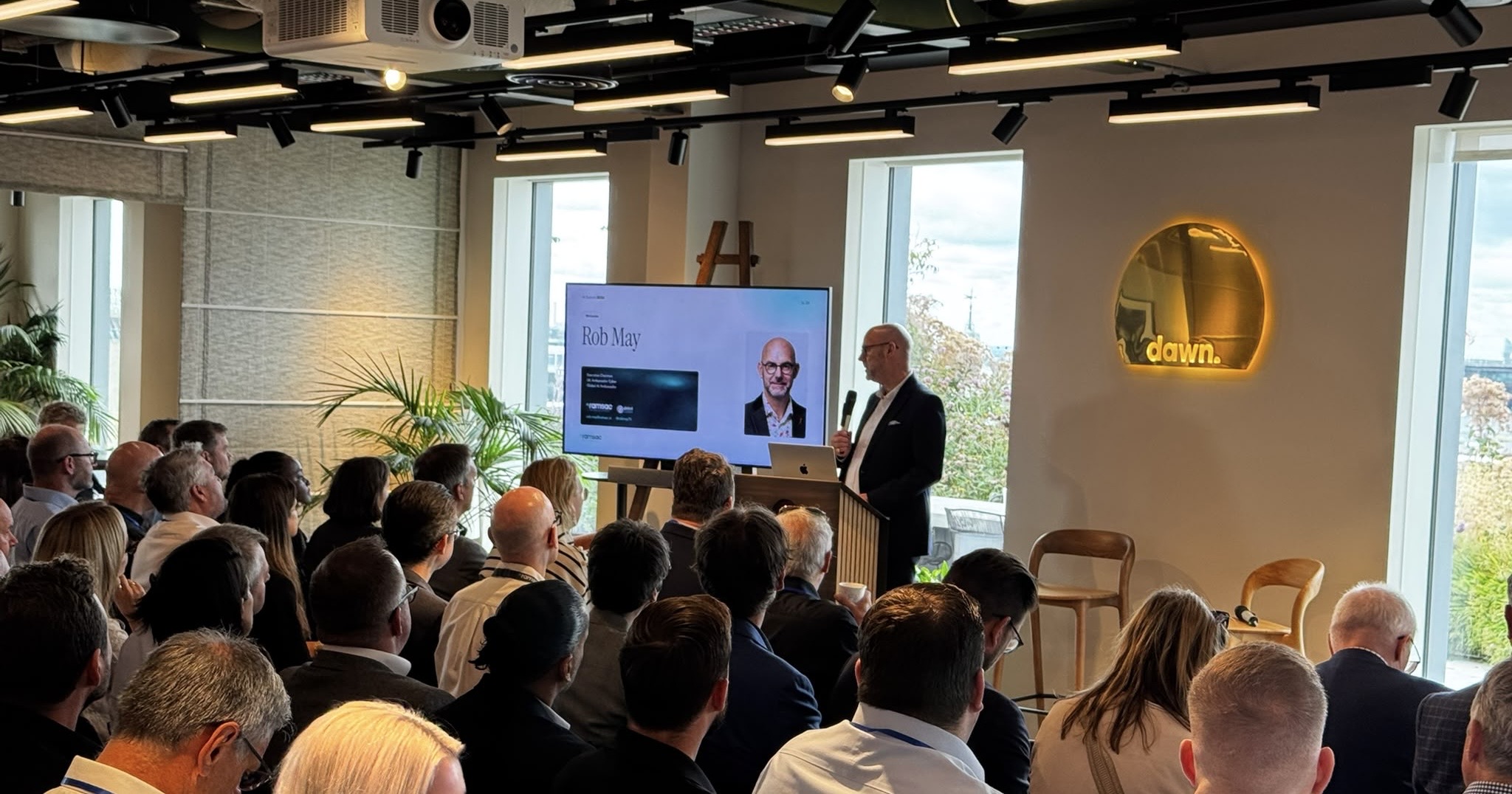
Four Reasons Not to Adopt AI
Four reasons businesses give for not adopting AI, and why none of them hold up. Practical thinking from the ramsac AI Summit on where to start.
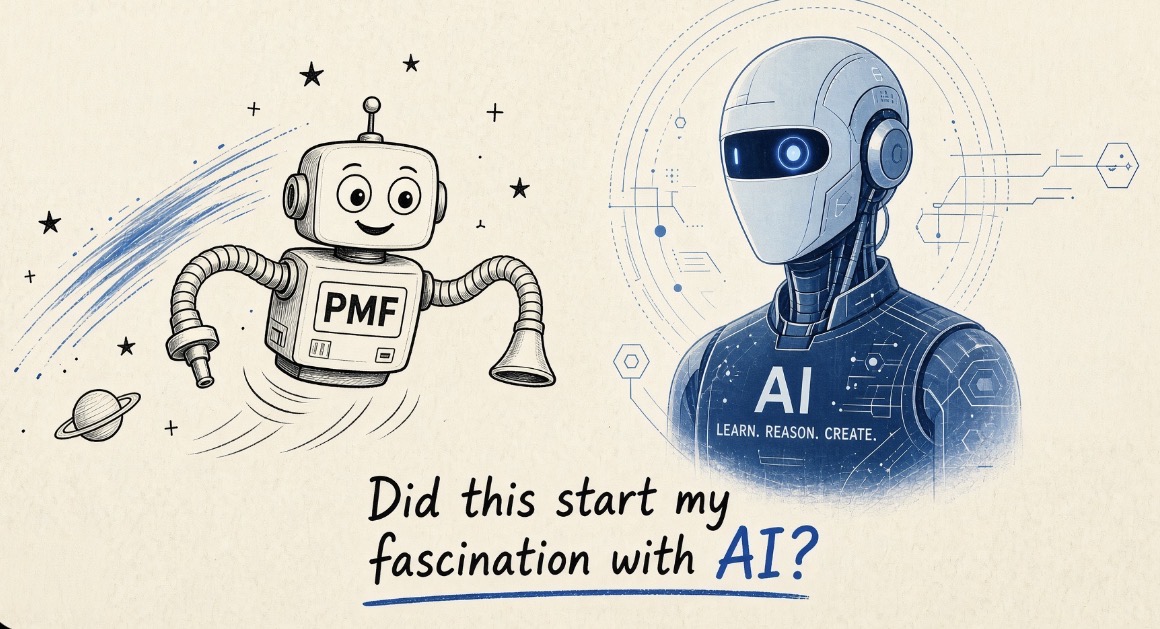
Did a French-speaking robot start my fascination with AI?
PMF was an extraterrestrial robot who arrived in France on a flying saucer, hovered rather than walked and helped pupils learn French. Very 1980s. Very low-tech by today’s standards. But clearly memorable and it got me wondering about just how much little things in our school days can influence our future.
Never miss an article
Get new articles by email
Whenever I publish something new on AI, cybersecurity and cyber resilience, I'll send you a link. No newsletters, no selling, and one click to stop at any time.
Your address is used only to send you new articles. See the privacy notice.