
The Three-Day Lag: Why Your Brain Doesn’t Believe You’re on Holiday Yet

I’m writing this from a family summer holiday, and there’s a fairly obvious irony in it. I’m meant to be switching off. Instead, the fact that I can’t quite manage it has become the thing I’m thinking about, which is either proof that my brain doesn’t know how to stop working, or proof of exactly the point I’m about to make.
The laptop’s shut and my out of office is on. And yet for the first few days, some part of my brain is still running the same background processes it runs at my desk, half listening for a notification, half planning the next task, half tracking things I don’t actually need to be tracking anymore. I’m thinking about new content for talks and ideas for future books, and it got me wondering how long that actually takes to switch off, and what happens once it finally does. So I’ve found myself reading and researching about the process and what happens when we stop.
Is this a stress thing?
For me personally this has nothing to do with stress. I’m not trying to escape anything. I know that I’m very work focused, I truly love my job and I get real satisfaction from what I do. Left to my own devices I’ll happily work seven days a week, not because anyone’s demanding it, but because I enjoy it. A family holiday is one of the only things that reliably interrupts that. Nobody’s chasing me for anything, the only pressure is the very reasonable expectation that I’ll actually be present, and even then it takes a few days for the habit to loosen its grip.
The brain doesn’t have an off switch, it has a dimmer
The research is fairly consistent on this. Cortisol, the stress hormone that keeps us alert and reactive, starts to drop within the first 24 hours of stepping away from work. That’s the quick win, the reason a long weekend can lift your mood almost immediately.
But there’s a difference between cortisol dropping and your brain actually believing the threat has passed. Studies looking at recovery from work stress describe a genuine transition period, not a switch flipping but a gradual stand-down, where the mind needs time to move from task-oriented alertness into something closer to rest. For most people, that’s not a matter of hours. It’s several days, sometimes closer to a week, before the constant low hum of “what am I missing” actually quietens.
This is why the first two or three days of a holiday often feel oddly unsatisfying. You’re technically resting, but you haven’t actually arrived yet.
The interesting bit happens after that
Once the alertness genuinely drops, something more useful starts to happen. A meta-analysis in Neuroscience & Biobehavioural Reviews found that rest promotes neuroplasticity, the brain’s ability to form new connections, which is exactly the mechanism behind creative thinking and problem-solving. This lines up with older research on insight and the “aha moment”, which shows that solutions to problems we’ve been stuck on often arrive not while we’re grinding at them, but when the mind is unfocused and wandering.
In other words, the constant-alert mode that makes us feel productive at work is often the same mode that blocks the kind of thinking that solves the harder problems. You can’t force an insight. You can only create the conditions where one is more likely to turn up, and being permanently switched on is not one of those conditions.
The bit nobody warns you about
Here’s the less comfortable finding. Researchers call the weeks after a holiday the “fade-out period”, and it can be surprisingly short. For some people, stress levels are back to baseline within three days of returning to work. For others it takes closer to a month, but the direction of travel is the same: whatever you gained can disappear fast, especially if you dive straight back into the inbox at full speed.
The single biggest factor in how long the benefit lasts isn’t the length of the holiday. It’s how quickly you re-introduce the exact behaviours that wound you up in the first place, checking email the moment you land, walking straight back into back-to-back meetings, treating the first day back like any other day.
What this actually means if you run a business
A few practical thoughts, mostly aimed at myself as much as anyone else.
First, don’t judge the value of a holiday by how you feel on day two. That’s usually still decompression, not rest. If anything, a short break that ends just as the alertness is starting to lift is the worst possible timing, you get the fatigue of switching off without any of the payoff.
Second, if you want your best thinking, protect genuine unstructured time, not just annual leave but the quieter, unscheduled pockets in an ordinary week. Being permanently available might look like commitment, but it’s quietly working against the creative and strategic thinking that actually moves a business forward.
Third, loving the work isn’t a get-out clause, if anything it deserves more attention, not less. Satisfaction doesn’t come with a warning light. There’s nothing uncomfortable nudging you to stop, no obvious cost you can feel in the moment, just genuine enjoyment that quietly stretches into a seventh day, then an eighth. A holiday only works as a reset if you let it actually interrupt that pattern, rather than just relocating it somewhere with better weather.
Fourth, think about how you land back at your desk, not just how you leave it. A single day with lighter expectations, no meetings stacked from 9am, is a small thing that protects a benefit that took a week to build.
We spend a lot of energy optimising how we work. It might be worth spending some optimising how we stop, even when stopping is the last thing we feel like doing.
Frequently asked questions
Why does it take a few days to relax on holiday?
Although cortisol levels drop within twenty four hours of leaving work, the brain requires a gradual transition period rather than a simple off switch. It often takes several days for task oriented alertness to settle, meaning the constant hum of work related thoughts naturally persists during the first few days of a holiday.
How does taking a break boost creativity and problem solving?
Research shows that rest promotes neuroplasticity, which is the brain ability to form new connections. When you step away from constant alert mode and allow your mind to wander, you create the necessary conditions for insight and creative problem solving, helping you resolve complex challenges that grinding at a desk blocks.
What is the post holiday fade out period?
The fade out period refers to the weeks following a holiday when the benefits of rest begin to disappear. For some people, stress levels return to baseline within three days, while for others it takes closer to a month. The speed of this fade out depends heavily on how quickly old work habits are reintroduced.
How can you protect the mental benefits of a holiday when returning to work?
To protect the benefits of a reset, avoid diving straight back into emails or back to back meetings on your first day. Planning a lighter initial workload with fewer meetings creates a buffer, preventing a rapid post holiday fade out and preserving the mental space and creative gains built up over your break.
Is loving your job a valid reason to skip regular holidays?
Enjoying your work is not a reason to skip breaks. Job satisfaction lacks a natural warning light, making it easy to quietly work seven days a week without noticing the toll. A holiday interrupts this pattern, providing the necessary unstructured time required for long term creative and strategic thinking.
You may also be interested in
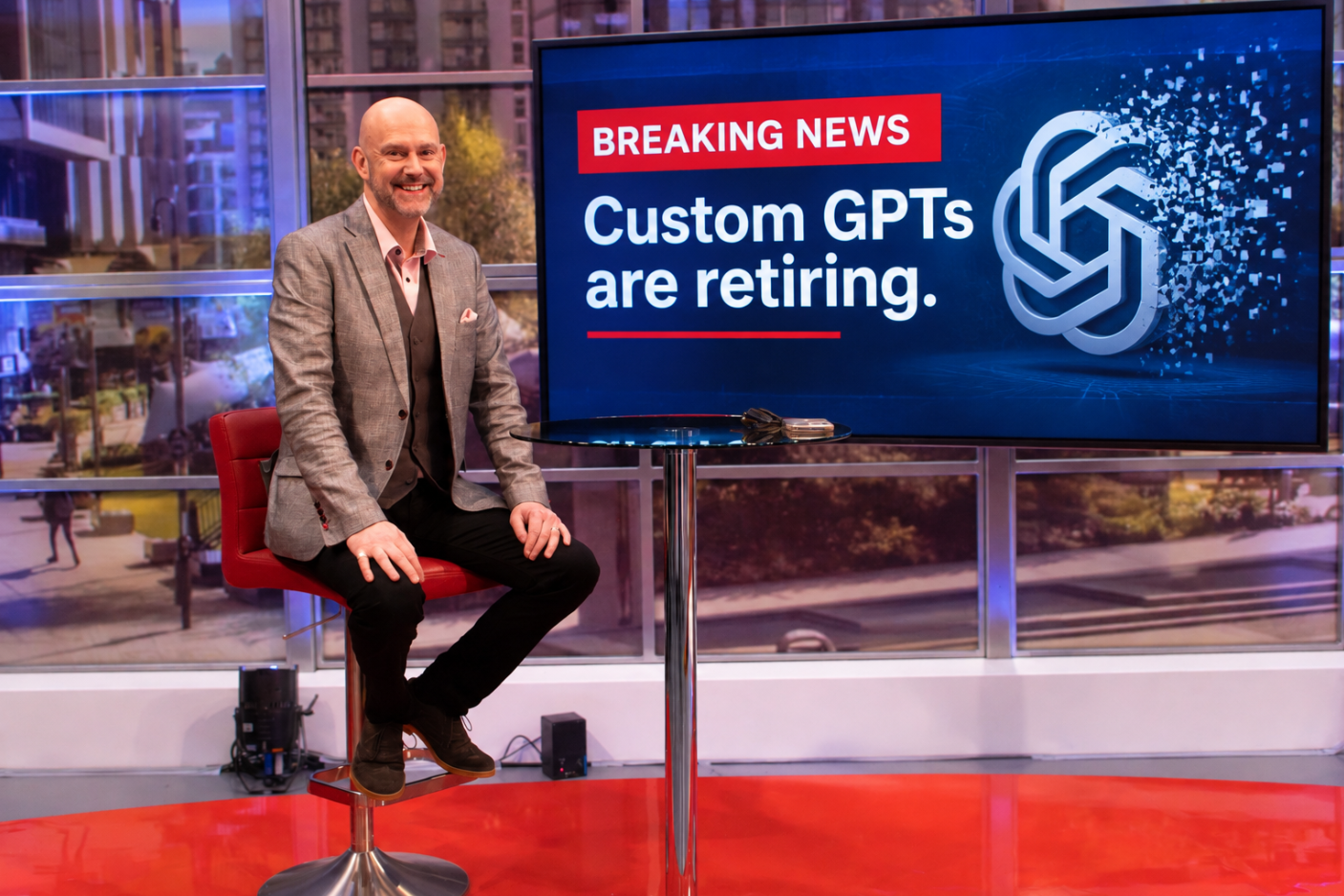
Custom GPTs are retiring. Here's what that means for you, and what to do about it.
OpenAI is retiring Custom GPTs, with new creation ending in October 2026 and existing GPTs switching off in December. But this isn't simply a name change. Plugins work differently, and the shift tells us something important about where AI is heading. Here's what you need to know, what to do with the GPTs you've built, and why businesses should use this moment to ask some overdue questions about the AI tools their teams have quietly been creating.
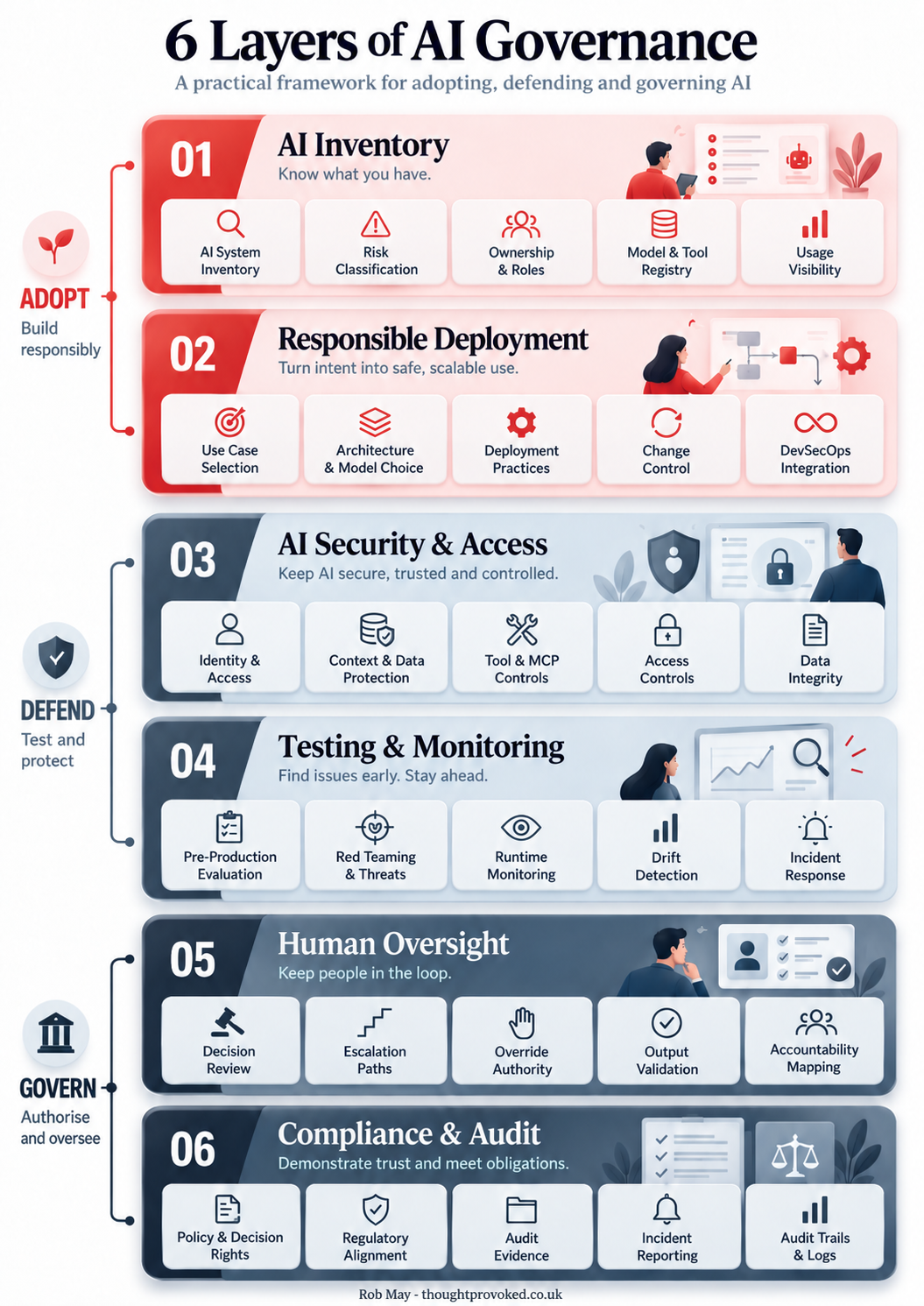
Six Layers of AI Governance: A Framework for Getting It Right
AI governance doesn't have to mean slowing everything down. This practical six-layer framework covers everything from AI inventory and responsible deployment through to human oversight and compliance, giving you a clear map of where your organisation stands and where the gaps are.
Never miss an article
Get new articles by email
Whenever I publish something new on AI, cybersecurity and cyber resilience, I'll send you a link. No newsletters, no selling, and one click to stop at any time.
Your address is used only to send you new articles. See the privacy notice.