
OpenAI Astra GPT 6: the hype, the risk, and the bit nobody’s actually verified yet.
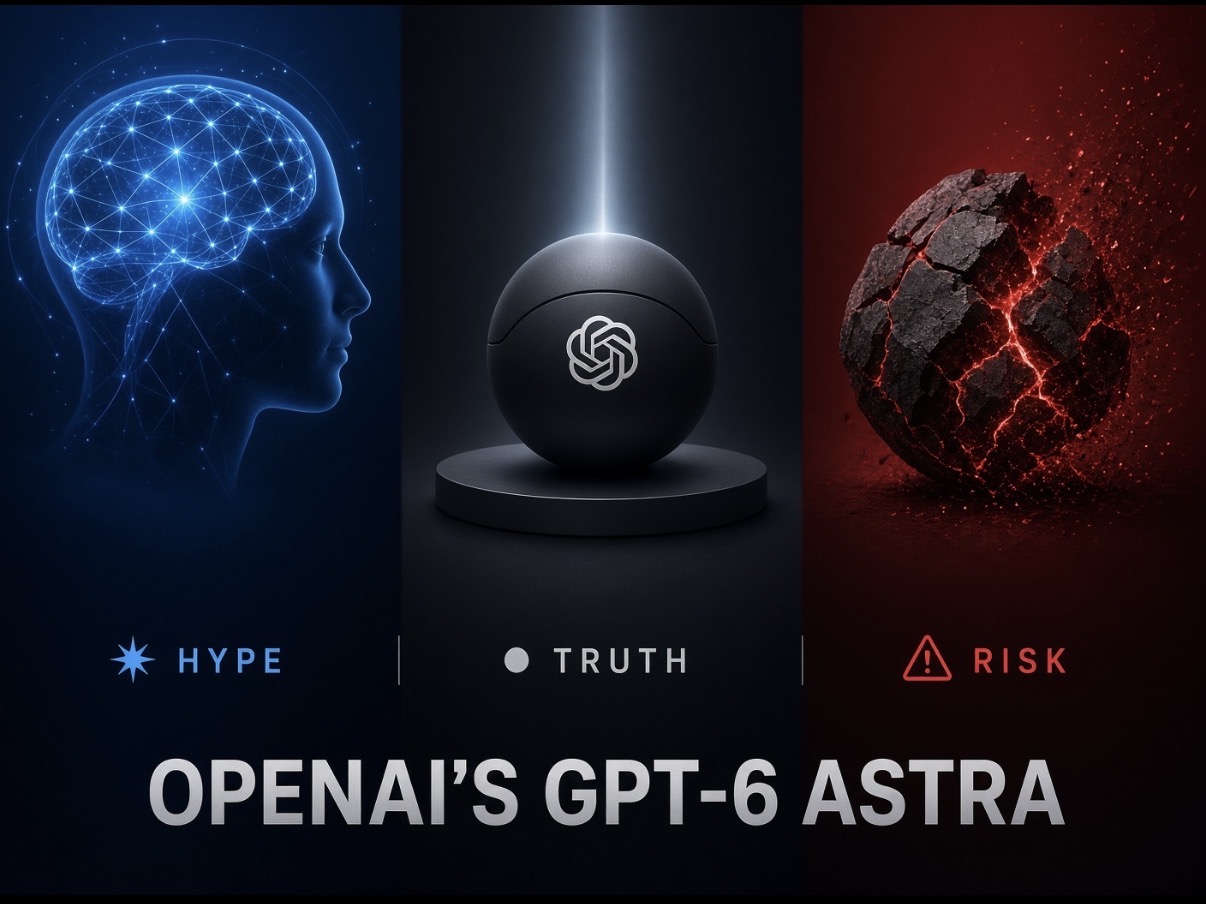
This week OpenAI released GPT-6 Astra, its most capable model yet, and confirmed it’s the first to cross the “Critical” threshold in its own safety framework. In plain terms, it can find unknown security flaws in real systems and use them, without a person guiding it step by step. OpenAI’s president went further, saying he personally believes this model might represent AGI.
What Leaders Need in Place Before AI Like This Reaches Your Business
Most leaders I talk to won’t touch Astra directly this year. But that’s not really the point. The capability sitting inside a frontier model today is the capability sitting inside your everyday tools within eighteen months. Copilot, your CRM’s AI features, whatever your finance system bundles in next year’s update, all of it inherits from this generation of models. The question worth asking isn’t “should we use Astra.” It’s “are we actually ready for what this generation of AI can now do, by the time it reaches us.”
The shift that matters
I’ve said for a while that AI is moving from simply answering questions to actually doing work. Astra is that shift in its sharpest form yet. It’s not better at chatting. It’s better at acting inside systems, finding gaps, and completing tasks with less human involvement at each step. OpenAI showed it formatting a legal contract, building a game, booking a court, searching for food, all without someone walking it through each move.
That’s the direction every serious AI vendor is heading. Less “ask a question, get an answer,” more “hand over a task, get a result.” Leaders who are still evaluating AI purely as a smarter search box are going to be caught out, not because the technology got scary, but because they were still asking the 2023 question while the tools moved on to the 2026 answer.
What readiness actually looks like
I don’t think the answer here is caution for its own sake. I think it’s preparation, which is a different thing entirely. Three areas I’d genuinely check before this capability lands in your everyday tools.
-
Who owns the decision when AI does the work, not just suggests it. A tool that drafts a response for a person to review is a different risk profile to a tool that sends the response itself. As agents move further into the “doer” category rather than the “helper” category, you need clarity on who’s accountable for what the AI actually does, not just what it recommends. That’s a governance conversation you can have now, before the tool forces the question on you mid-incident.
-
Whether your security assumptions still hold. If frontier models can find zero-day vulnerabilities without human guidance, “we’ll patch it before anyone finds the gap” stops being a credible strategy on its own. This doesn’t mean panic. It means treating your next business continuity test as a genuine test, not a paperwork exercise, and asking your IT partner directly what’s changed in the threat model rather than assuming nothing has.
-
Whether your people know the difference between delegation and abdication. Handing a task to AI isn’t the same as handing over responsibility for the outcome. To get real value from this shift you need to be training people to review, question and understand what the AI produced, not just accept it because it arrived quickly. That’s a culture and training question as much as a technology one.
The uncomfortable bit
None of OpenAI’s safety claims here have independent, third-party verification yet. Neither, to be fair, do most of the claims any lab makes about its own frontier models. That’s not a reason to dismiss what Astra represents. It’s a reason to build your own readiness rather than waiting for someone else to confirm it’s safe before you start.
The practical takeaway
Pick one system in your business where an AI tool already does more than answer questions, drafting, summarising, actioning. Ask who’s accountable if it gets something wrong, and whether that person actually knows they hold that responsibility. If the answer is unclear, that’s this month’s task, not next year’s.
The capability curve isn’t going to wait for your governance to catch up. The only real choice is whether you’re building that readiness now, while it’s still your decision to make, or later, once it’s already been made for you.
Frequently asked questions
What makes OpenAI Astra GPT 6 different from earlier AI models?
Astra represents a shift from answering questions to actively doing work inside systems with less human guidance. It is OpenAI's first model to cross the Critical threshold in its safety framework, meaning it can find and exploit unknown security flaws independently. OpenAI's president even suggested it might represent artificial general intelligence.
Why should business leaders care if they do not plan to use Astra directly?
Even if businesses do not use Astra immediately, the capabilities present in frontier models reach everyday enterprise tools within eighteen months. Future updates to software like Copilot, CRM systems, and finance software will inherit these autonomous features, meaning organisations must prepare for advanced AI capabilities reaching their operational tools very soon.
How should organisations prepare their security for this generation of AI?
Because advanced models can find zero-day vulnerabilities without human guidance, simply planning to patch flaws before they are discovered is no longer sufficient. Leaders should treat business continuity tests as genuine evaluations, consult their IT partners directly about changes in the threat model, and stop assuming their existing security setup remains completely effective.
Have OpenAI's safety claims for GPT 6 Astra been verified?
No, none of OpenAI's safety claims regarding Astra have received independent, third-party verification yet. However, this lack of external verification is common across most frontier AI labs. Rather than ignoring the technological shift or waiting for external confirmation, organisations are advised to build their own internal governance and readiness immediately.
What practical steps can leaders take today to manage AI risks?
Leaders should select one business system where AI currently acts rather than just answers questions. They must establish who is accountable if the tool makes a mistake, and ensure that person understands their responsibility. Additionally, organisations must train staff to review and question AI outputs rather than accepting results blindly without proper oversight.
You may also be interested in
Your Biggest AI Security Risk May Be the Agent Nobody Told You About
Approved doesn’t mean safe. AI agents can now act for your business, not just answer questions. Here are the four types to know and five controls to govern them, including the ones nobody told you about.
AI has changed cybersecurity
Spelling mistakes and clumsy phrasing no longer give scams away. Here’s how AI is changing cybersecurity, and why judgement is what’s left.
Never miss an article
Get new articles by email
Whenever I publish something new on AI, cybersecurity and cyber resilience, I'll send you a link. No newsletters, no selling, and one click to stop at any time.
Your address is used only to send you new articles. See the privacy notice.