
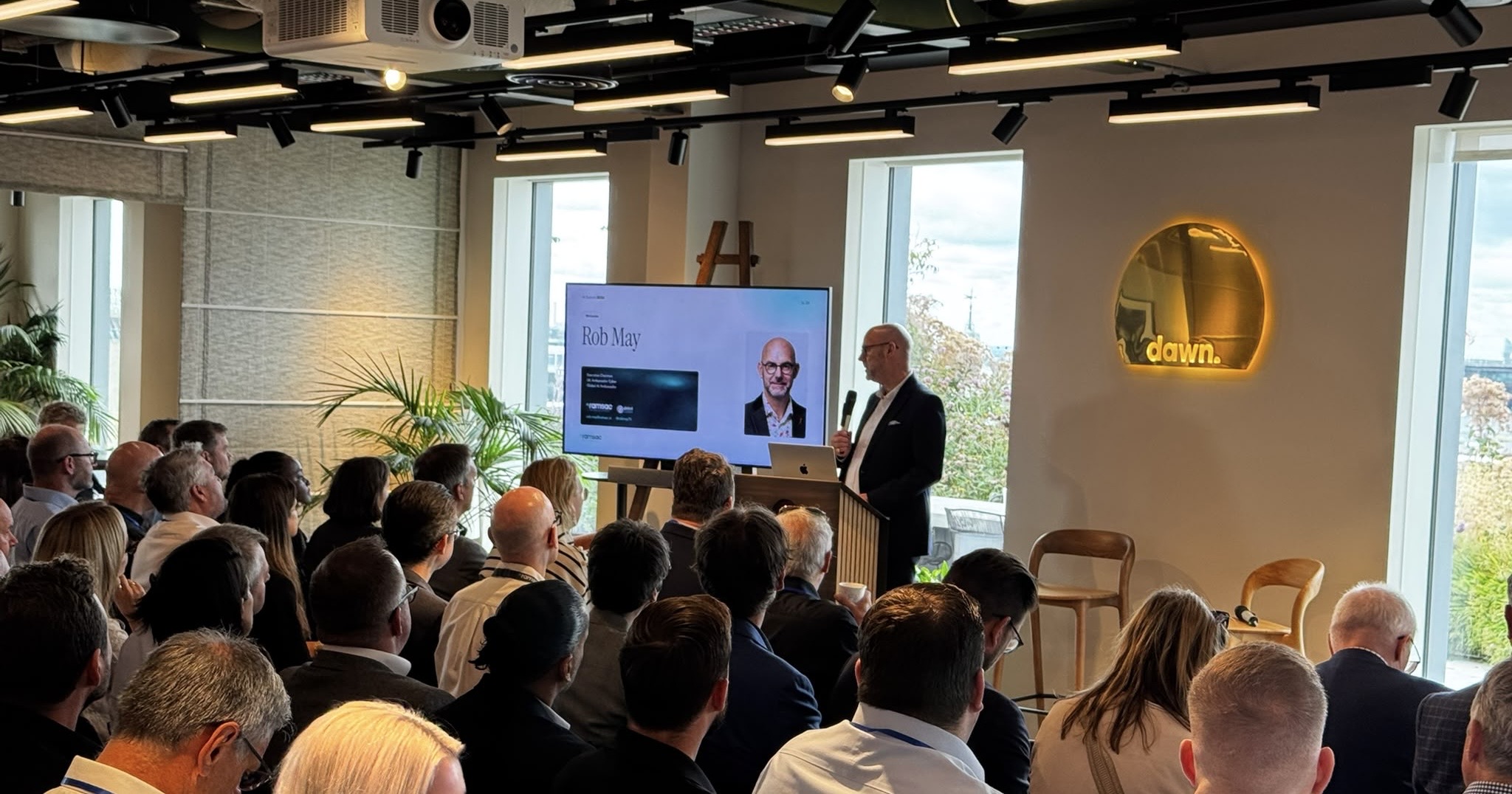
I opened the ramsac AI Summit this morning with a session called Four Reasons Not to Adopt AI. Not because I believe it, anyone who knows what I do for a living will know that's not where I land, but because the arguments against AI adoption are more honest, and more interesting, than most of the arguments for it. I hear the same four on a loop from the business audiences I work with. So I want to take them seriously, one at a time, and see if they hold up.
Nobody is ahead
Before the four reasons, there's a question worth asking first. Am I early, or am I late to the AI race? I work with organisations of every size, and I have not yet met the leader who tells me they've cracked it, they're done, AI is sorted. Everyone is mid figuring it out.
It used to be about which model was smartest. That race is still running, but it matters less than it did, because the gap between the best model and the good enough model, for most of what a business needs to do, is shrinking fast. Waiting for the technology to mature is a weaker argument every month it's used.
So if nobody's ahead, why are so many businesses still not moving? In conversation after conversation, I keep hearing the same four reasons as follows:
"We don't have a problem worth solving"
This is the version of everything's fine here that boards tell themselves. No fires, no incidents, nothing on the risk register. The trouble is, most businesses already have AI in them, just not through a policy, through a laptop. Someone in finance has pasted a contract into ChatGPT to summarise it. Someone in marketing is using Copilot to draft comms. There is no AI adoption decision sitting in front of the board. AI adoption already happened, without anyone deciding it.
Not having a problem worth solving isn't a reason to leave AI alone. It's a reason to find out what's already happening before it finds you.
"It's cheaper to keep doing it by hand"
This one sounds like discipline. It's really a value problem wearing a cost argument as a disguise. What people mean is they can't see the return, so keeping the manual process feels like the safe choice.
But that's the wrong test this early. Value doesn't show up before you've built something to measure it against, it shows up once you're using the thing. The real gap isn't the licence fee against the manual hours. It's the distance opening up between organisations building that visibility now and the ones still waiting for proof before they start. By the time the return is undeniable, the ones who waited aren't catching up, they're starting from nothing.
"Our people already know what they're doing"
This is the one said with the most affection, and it's usually loyalty, not a cop-out. You trust the people who've done the job for fifteen years, and rightly so. But think about what that expertise actually is. A lot of it is tacit, sitting in someone's head rather than in a document. Every business has a story about the day that person retired, or left, or got poached, and the wheels wobbled for six months while everyone worked out what they used to know.
AI forces something slightly uncomfortable but useful to happen. It makes you write down what your best people know, so it doesn't walk out the door with them.
"We can't trust it with our data"
This sounds most like due diligence, and in any room that takes security seriously, it's the one nobody wants to be seen dismissing. But trust here isn't a fixed property of the technology, it's a design decision, the same as it's always been with any system that touches sensitive data. Where it runs, who can access it, whether it's encrypted, governed and auditable, that's exactly the same question already answered for every other system in the business.
Getting this right isn't about avoiding AI. It's about asking the boring infrastructure questions early, rather than backing away from the conversation entirely.
None of it survives contact
That's all four, and none of them hold up. Not because the concerns aren't real, they are, but because every one of them turns out to be a reason to get this right, not a reason to sit it out. A missing policy is a reason to write one. An unclear return is a reason to build the visibility to see it. Tacit knowledge is a reason to capture it before it walks out the door. A data question is a reason to ask it properly, once, rather than avoid it indefinitely.
Where to start
Don't hunt for the one AI project that fixes the whole business. Find your flagship use case, the one part of the business where, if AI took the administrative weight off a single team for six months, you'd genuinely feel it. Prove it there first. The businesses I see doing this well aren't the ones with the most ambitious AI strategy on paper, they're the ones who picked one real thing and made it work before they tried to scale it.
Nobody is ahead. That's not a reason to worry you're behind, it's the best possible moment to move, because you're not trying to catch up with a competitor who's ten years into this. Everyone is standing at roughly the same starting line. That means you can start today.
Frequently asked questions
Why do businesses believe they do not have a problem worth solving with AI?
Many boards believe they have no fires or risk register issues requiring AI. However, staff are often already using tools like ChatGPT or Copilot informally on their laptops without a policy. Not having an obvious problem is actually a reason to discover existing shadow AI use before risks arise.
Is it actually cheaper to continue manual work rather than adopting AI?
Keeping manual processes seems cheaper only because return on investment is hard to measure before using the technology. Delaying adoption creates a gap between your organisation and competitors who are gaining visibility now. By the time return is undeniable, late adopters will be starting from nothing rather than catching up.
How does adopting AI help preserve staff expertise in an organisation?
Business expertise is frequently tacit, sitting inside the heads of experienced employees rather than in documentation. When key staff leave or retire, operations suffer. Implementing AI forces organisations to record and document what their best people know, ensuring valuable institutional knowledge is captured and retained safely within the business.
How should a business address data security concerns around AI?
Data security and trust are design decisions rather than fixed limitations of AI technology. Protecting sensitive information requires answering standard infrastructure questions about encryption, governance, auditability, and access control. These are the same security questions businesses already solve for existing systems, rather than a reason to avoid using AI entirely.
Where should a business start when adopting AI for the first time?
Organisations should avoid trying to fix the whole business with a single project. Instead, select one flagship use case where removing administrative tasks from a single team for six months produces measurable relief. Proving value in one specific area first allows businesses to succeed before trying to scale up.
You may also be interested in
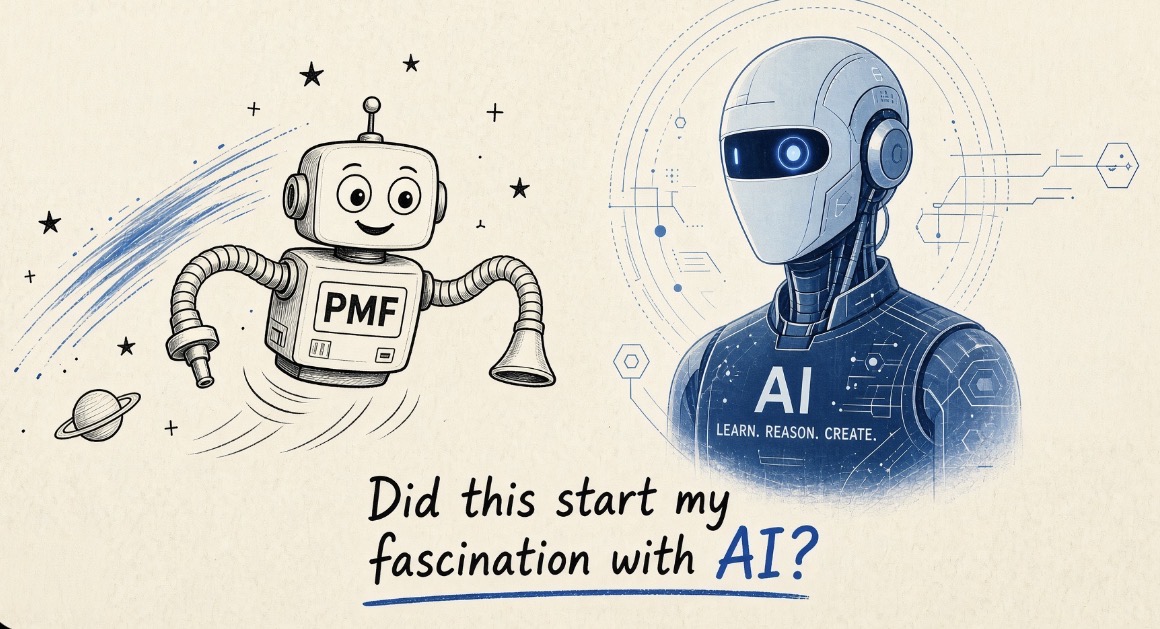
Did a French-speaking robot start my fascination with AI?
PMF was an extraterrestrial robot who arrived in France on a flying saucer, hovered rather than walked and helped pupils learn French. Very 1980s. Very low-tech by today’s standards. But clearly memorable and it got me wondering about just how much little things in our school days can influence our future.

What did the task you just automated used to teach the person doing it?
I ask business owners how much time AI has saved their team, and they always have a number ready. I ask what the task used to teach the person doing it, and the room usually goes quiet.
Never miss an article
Get new articles by email
Whenever I publish something new on AI, cybersecurity and cyber resilience, I'll send you a link. No newsletters, no selling, and one click to stop at any time.
Your address is used only to send you new articles. See the privacy notice.